There are particular moments in a person's journey through technology that resonate deeply, feeling less like simple upgrades and more akin to personal confessions, unveiling truths we've long hidden from ourselves. For me, that transformative moment arrived unexpectedly in the early months of 2008, a time I can distinctly recall, as it would come to change everything I thought I knew about computing.
Back then, I was a steadfast, loyal Microsoft man — a champion of their software, navigating the digital landscape with spreadsheets, docking my tasks in Outlook, and finding comfort in the familiar hum of the Windows startup tones that heralded my entrance into the day’s labor. Each sound brought with it a sense of routine, stability, and predictability that grounded my work life. I had intimately mastered the intricacies of my environment. I knew the rituals that accompanied my daily operations; the precise keystrokes and commands that made my workflow seamless. I had become proficient at navigating the quirks of my operating system, each glitch a minor puzzle I delighted in solving. I knew where every single setting lived, often even uncovering those elusive ones that didn’t want to be unearthed, tucked away in the depths of menus where they lingered, reluctant to be revealed. My workflow was not only predictable and stable, it had become deeply ingrained in the fabric of my productivity, a rhythm I had grown so accustomed to that any thought of deviation felt almost unsettling.
But something was beginning to stir deep within me, a sensation that had been simmering just beneath the surface of my steadfast loyalty. I would often find myself sitting quietly in coffee shops, my attention inevitably drawn to those glowing screens that seemed to exude an almost ethereal light. Each elegant, sleek aluminum lid caught the daylight like a beacon, serving as a window to an entirely different realm of computing. I observed, with a mixture of envy and curiosity, how their users effortlessly performed gestures that appeared almost like magic tricks, fluid movements that made their interactions look enchanting and instinctive. The interfaces were refreshingly minimal, their layouts designed with an aesthetic that invoked a sense of tranquility, almost as if they were inviting me to experience a calm amidst the chaos of digital life.
Then, one fateful day, I found myself walking into an Apple Store under the guise of merely wanting to browse—a flimsy cover for the truth that I was secretly yearning to explore. “Just to look,” was the phrase I whispered to myself, the first and perhaps most common lie every would-be switcher tells themselves as they stand on the precipice of a momentous decision. The bright, airy space was filled with the soft hum of conversation and the alluring charm of all things Apple, but my heart raced with a mix of trepidation and excitement. I was about to step into a world that could potentially upend everything I thought I knew about my computing existence.
There it was, nestled among the vast array of digital artifacts, a relic of my past that sparked an onslaught of memories:
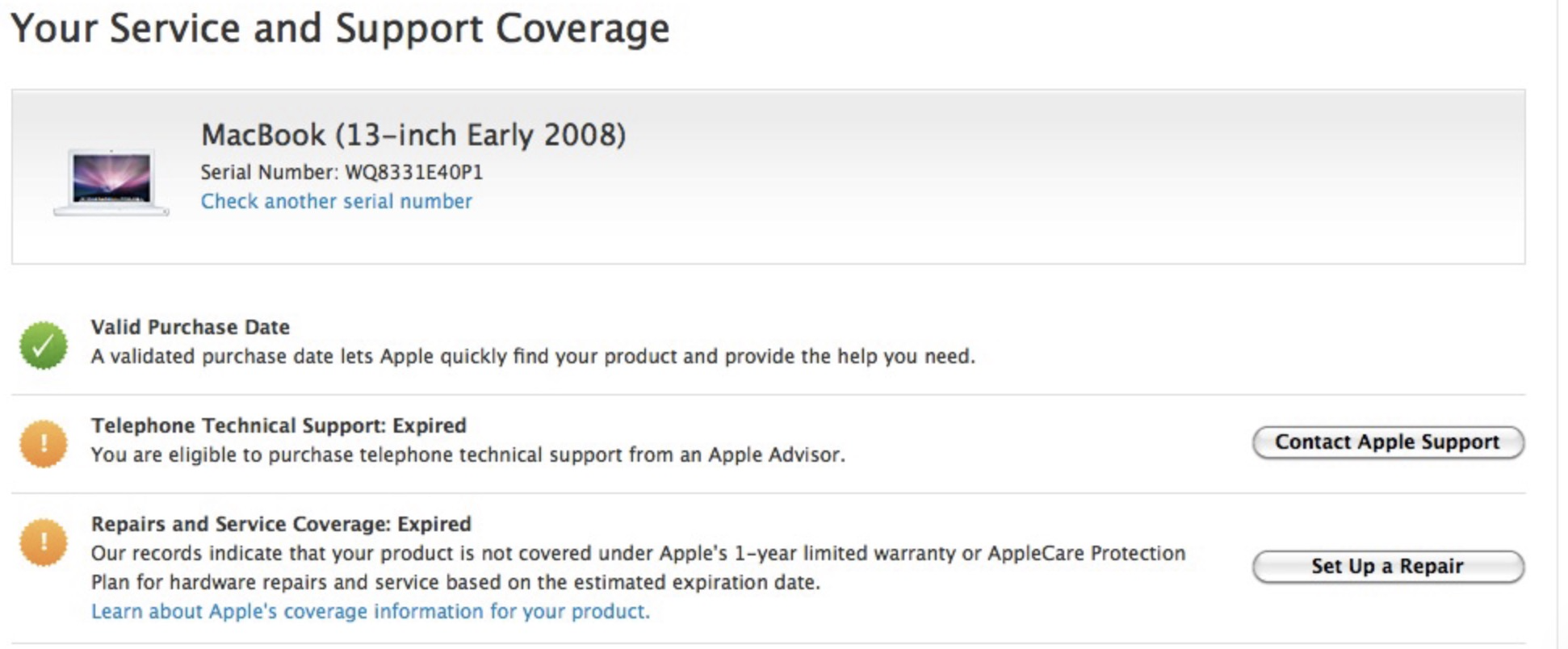
MacBook (13-inch, Early 2008).
The sleek, white polycarbonate chassis gleamed under the soft light, a testament to a design that was both elegant and deceptively resilient. It came equipped with Leopard OS, an operating system that felt like a warm embrace, inviting and familiar yet decidedly sophisticated.
Its serial number WQ8331E40P1 was more than just a string of letters and numbers; it was an identifier that marked the beginning of a significant transformation in my life—an unassuming machine that would go on to alter my entire approach to technology and creativity in ways I could hardly comprehend at the time.
I acquired it stealthily, as though shrouded in the shadows of my own conscience. There were no triumphant fanfares heralding my decision, no extravagant announcements made to friends or family, and certainly no elaborate ceremony to commemorate this pivotal purchase. It was simply a quiet betrayal against the old, a solitary act of defiance that carried with it enormous weight.
At first, I attempted to convince myself that acquiring the MacBook was merely a temporary measure, a side machine that I would use just for testing various applications and exploring its features out of sheer curiosity. However, the truth that lay beneath the surface was much more straightforward and profoundly personal: I was falling—slowly but surely—under the mesmerizing spell of this new device.
With each passing moment, Spotlight found files faster than my thoughts could coalesce into coherent ideas. It felt as though I was in a race against time, only to be assisted and outpaced by a digital companion who understood my needs before I did. Exposé gracefully transformed the chaos of multitasking into a seamless choreography, executing windows into neatly organized spaces as if they were dancers gliding effortlessly across the stage. Time Machine, with its gentle reminder of, “I’ve got you,” offered a safety net that soothed my anxious thoughts about loss and misstep. Unlike my previous experience with computers, this Mac didn’t simply boot up—it *awoke,* as though it was drawing me into a world of potential with a heartbeat of its own.
With each new feature I harnessed, one workflow at a time, I found myself gradually drifting away from the clutches of Microsoft. The familiar, once-reliable Mail application transformed into the beautifully simple Mail.app, where interactions felt like conversations instead of mere exchanges. Contacts morphed into the user-friendly Address Book, becoming a curated collection of connections that brought joy instead of frustration. My calendar, once a source of constant crashing and despair, now stood steadfast, allowing my plans to flourish instead of blocking them off with digital errors. My soul, which had often expressed its burdensome sighs of exasperation during previous computing endeavors, began to settle into a tranquil rhythm. I was not just adapting; I was evolving, and I could feel the shift in every fiber of my being.
I kept the old PC around like a dust-covered relic of a bygone era, a reminder of the struggles I once faced, but the MacBook rose to take on a more sacred role in my life. It became my altar, a place where creativity and inspiration converged. I wrote sermons on its pristine keyboard, pouring my thoughts into essays and articles that felt charged with purpose. I built elaborate workflows on it, meticulously crafting processes that streamlined my daily routines and allowed my thoughts to flow seamlessly. I shaped vibrant stories on it, characters and plots bursting to life as I typed, transforming blank pages into vivid narratives that danced in my mind.
This machine was more than just a device; it symbolized a profound shift in my philosophy, a marked transition from chaos and control to a harmonious state of flow. It represented a departure from patching up fragmented ideas, instead embracing a presence that honored the creative process itself. The clutter of my former digital life faded away, replaced by clarity and intention, as if the air around me had been cleared of fog and debris.
Years passed, unfurling like the delicate petals of a blooming flower. The MacBook, once as vibrant as the day it was born, eventually aged with grace, its once-enthusiastic battery gradually losing its spark. The ports that had once allowed for seamless connectivity grew obsolete, mirroring the quick pace of technological advancements beyond its walls. Yet, even as time took its toll, I never forgot it. That cherished machine, my faithful companion through the endless possibilities of creation, remained etched in my memory—the cornerstone of my journey toward a more intentional digital existence.
And tonight, I had the good fortune to stumble upon an old record—a long-forgotten screenshot captured from the archives of Apple Support, a digital relic that confirmed not only the details of the purchase but also the deeper sense of betrayal that accompanied it. More importantly, it marked the significant turning point in my journey, the inception of something larger than just a mere acquisition.
That MacBook was indeed more than just a device; it was the pivotal first chapter of what I would come to call TimCentral, a concept that embodied everything I sought to create and preserve in my life. It represented the very first step towards establishing clean rituals, practices that fostered mindfulness and intentionality, woven intricately with shared memories and experiences. It bridged the gap between the clutter of the past and the clarity I now pursued, alongside an ethos of sacred tech stewardship—a commitment not just to use technology, but to honor and respect it as a powerful tool for growth and creativity.
Reflecting upon it all now, I realized that even with its flaws and limitations, I wouldn’t change a single moment, not a single decision along the way. The lessons were invaluable, the memories priceless, shaping my understanding of what it meant to truly embrace the digital landscape with purpose and passion.